
How Smart Home Technology Will Change Lives
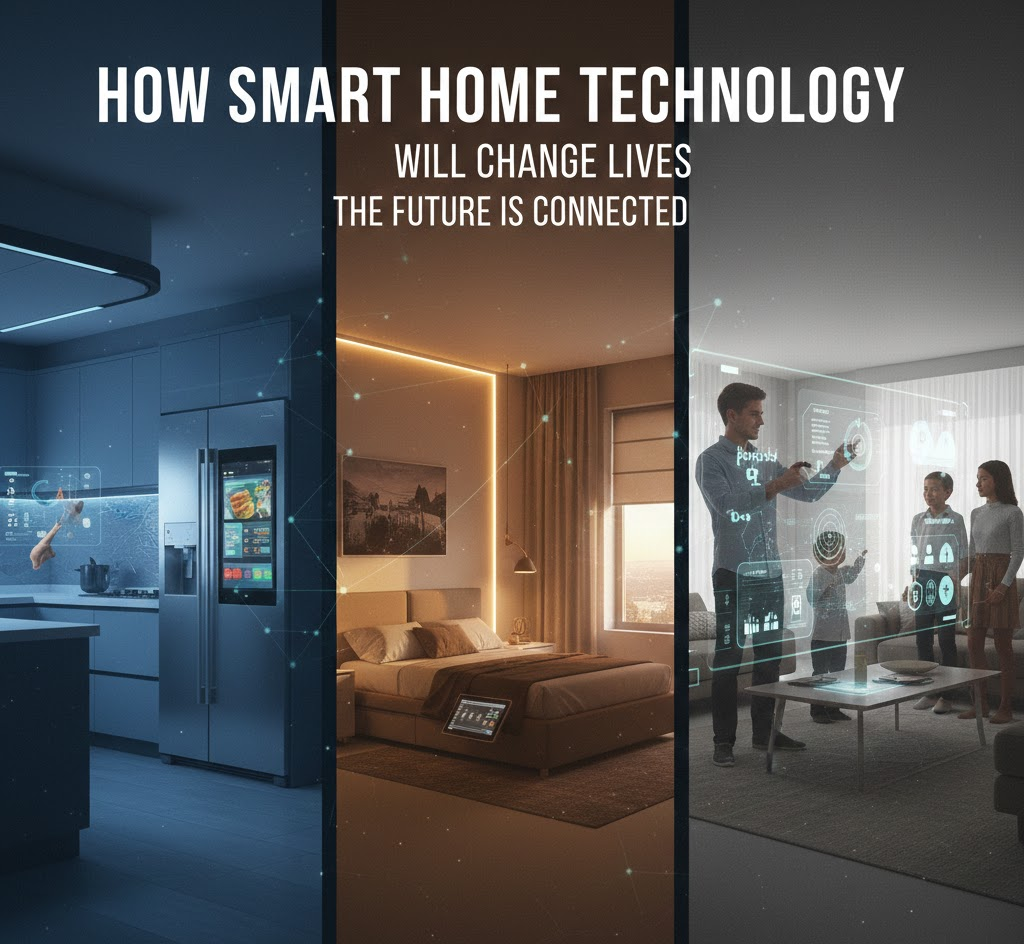
Introduction: The Reasons Smart Home Technology Matters
The homes of today are not only places to sleep or cook and unwind. They are gradually becoming smart spaces that are able to learn, respond and respond to the needs of humans. Technology for smart homes has changed the way people are living by making daily chores easier, safer and efficient.
With lighting systems that automatically adjust to alarm systems that notify the user in real time The tools of today are forming an entirely new lifestyle. The understanding of how the smart home can transform lives, helps us to prepare for the future in which the comfort of home and security work in a seamless way.
How smart Home Technology Will Change Lives?
Smart home technology is gadgets and systems that make use of technology like the Internet, sensors as well as automation, to handle the household’s tasks. The devices are able to communicate with one another and react to the user’s commands or behavioral patterns.
The most significant change is the ways these systems can reduce work and enhance the process of making decisions. Instead of directing everything manually home systems begin to aid users, which saves time while increasing the quality of their lives.
The Basics What Smart Homes Do Homes Function
Smart homes are based on a mix of software, hardware and connectivity. devices like smart bulbs, thermostats and speakers, locks as well as cameras, are linked via Wi-Fi, or hubs that are specifically designed for it.
Sensors play a significant function. Temperature detectors, motion sensors as well as voice recognition software gather data. These data are handled by software, which determines the best course of action like lowering the lights or changing the temperature in a room.
Mobile apps and cloud platforms enable users to manage the systems via remote control. Artificial Intelligence helps these systems understand routines which makes automation more efficient in the course of time.
The benefits that come with Smart Home Technology
One of the main benefits is its convenience. Easy tasks such as shutting off lighting or locking doors could be done on a schedule. This helps reduce stress levels and mental strain.
The efficiency of energy use is another important benefits. Intelligent thermostats and lighting systems cut down on power consumption by operating only when it is needed. This reduces costs and promotes sustainable living.
The security and safety of the home also get better. Alarms, cameras, as well as door sensors, provide immediate notifications, ensuring families are secure at home as well as when they are away.
Practical Use for Daily Life
Home automation tools for smart homes fit seamlessly to your daily routine. Early morning alarms could trigger the lights as well as music. Systems for controlling temperature can change prior to the time people get at their homes.
Voice assistants can help you manage your agendas, reminders, as well as grocery lists. Kitchens with smart appliances can track their appliances and recommend the best use of energy.
Family members, seniors and people who have handicaps, the systems provide additional independence and ease of the daily routine.
How do you apply Smart Home Technology Daily
Start by introducing just one or two devices rather than upgrading all of them in one go. Smart bulbs or a plug can be the simplest start point.
Set up simple automation rules for example, like turning lights off when there is no movement observed. In time, you can expand it to temperature or security systems.
Make sure to regularly update your software and look over your settings regularly. This will ensure better performance, security and a more seamless connection across platforms.
Environmental and social Influence
Smart homes have the potential to drastically reduce the amount of energy wasted. The automated heating and lighting systems are able to respond to the actual demand instead of a fixed schedule.
Reduced energy use decreases carbon emissions in the long run. If they are widely adopted, smart homes can contribute to more environmentally sustainable cities.
These technologies can improve social accessibility. Mobility-challenged people or those with medical issues gain greater in control over their environment with no exerting physical effort.
Problems, risks and limitations
However, despite the advantages that smart home technology offers, it has problems. Privacy of data is an important issue, since the devices are able to collect personal data.
Costs for initial systems can be expensive. Although prices are dropping but full-scale systems can be costly for certain families.
Dependence on technology is another problem. Internet problems or outages could disrupt routines and daily activities and highlight the necessity for solid backups.
Traditional Living vs. Smart Homes
Traditional homes rely on manual controls and set routines. Temperature, lighting, as well as security, require continuous attention from the homeowners.
Smart homes of the future shift the responsibility of monitoring to automation system. Instead of reacting to any issues they anticipate the needs of their users and react proactively.
This shift is part of a wider shift towards digital living in which comfort and productivity are integrated into every day spaces.
Professional and Industrial Applications
Beyond homes The impact of smart homes is on healthcare, real estate and even hospitality. Smart buildings help in energy management for apartments and offices.
Health professionals utilize the home monitoring system to monitor health and safety of their patients remotely. These systems help elderly patients and homes-based health care.
Developers of property integrate intelligent technologies to improve the value of property and ensure long-term sustainable development.
What to do at Home: Steps for Beginners
Start by identifying the issues that you face daily like high electric costs or security worries. Find devices that can meet those requirements.
Choose reputable brands to ensure that your device is compatible with your phone as well as your current system. Easy setup instructions make the process simple for newbies.
Build routines and automatization gradually. With time, you will be able to use new features are able to be added, but without overwhelming complexity.
Conclusion: Future Value in Smart Home Technology
The smart home is much more than just a trend. It’s a change of how individuals interact with their homes. Through reducing work, increasing security, and promoting sustainable development, these systems improve the quality of living.
As technology advances Smart homes will be easier to use and more accessible. Knowing their effects can help people make informed decisions and change easily.
Long-term the smart home is not meant to take control of humans instead, they aim to improve living by implementing thoughtful innovations.
Also Read: Everything You Need to Know About Owala Water Bottles