
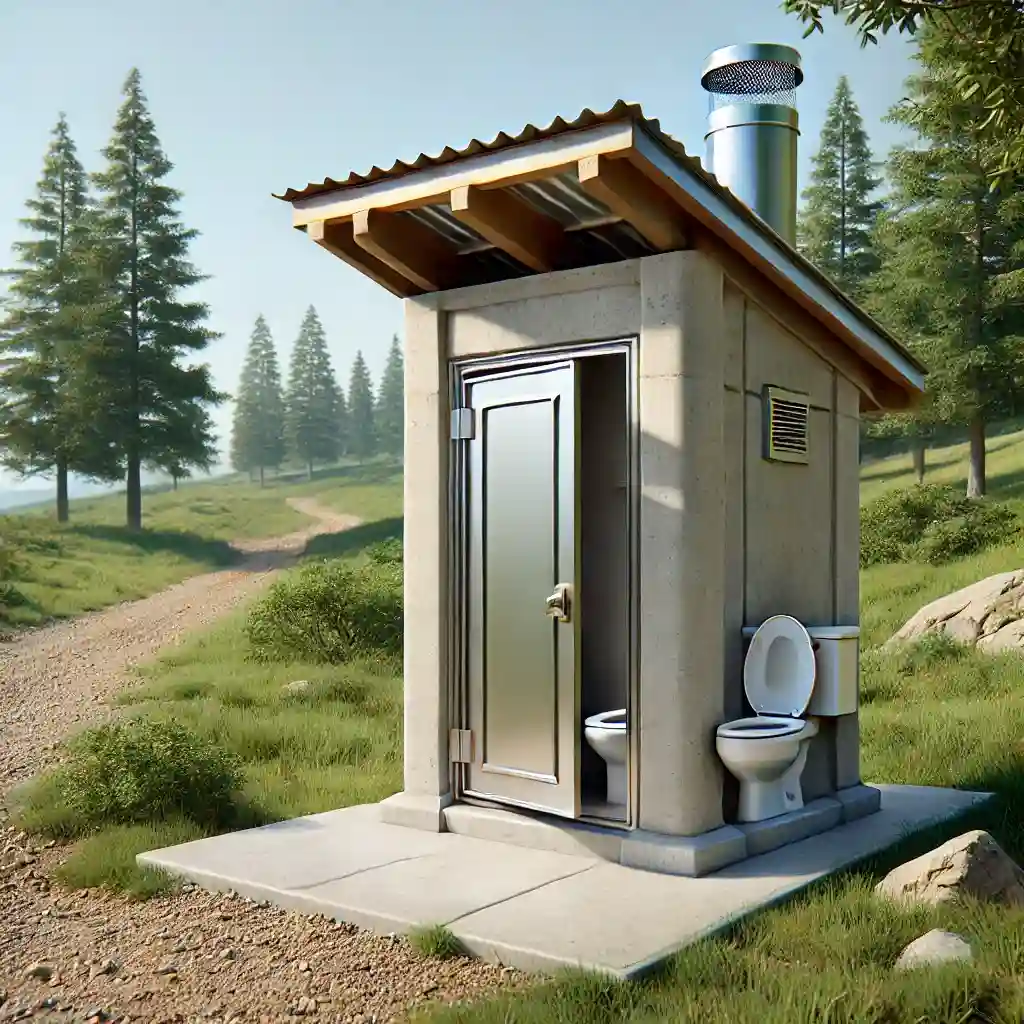

Discover everything you need to know about vault toilets: how passive solar ventilation works, underground containment engineering, key structural features, side-by-side comparisons with alternative sanitation systems, maintenance procedures, and answers to common user questions.
Table of Contents
- 1. Introduction: What is a Vault Toilet?
- 2. How Vault Toilets Work: The Physics of Passive Ventilation
- 3. Key Engineering and Structural Features
- 4. Environmental Impact and Groundwater Protection
- 5. Comparative Analysis: Vault Toilets vs. Other Systems
- 6. Maintenance, Pumping, and Operational Challenges
- 7. Proper Etiquette and Rules for Visitors
- 8. Frequently Asked Questions (FAQs)
- 9. Conclusion & Summary
1. Introduction: What is a Vault Toilet?
A vault toilet is a permanent, waterless, non-flush restroom facility engineered for off-grid locations such as national parks, backcountry campsites, highway rest stops, state recreation areas, and remote trailheads. Unlike temporary portable restrooms (commonly known as port-a-potties), a vault toilet features a permanent building structure constructed over a large, watertight underground holding tank called a vault.
These facilities provide a safe, hygienic, and environmentally sound human waste management solution in areas where municipal running water, power grids, and sewer hookups are unavailable or cost-prohibitive to install. Designed to withstand severe weather, wildlife intrusion, and heavy public use, modern vault toilets offer a durable sanitation infrastructure for land management agencies like the U.S. Forest Service, National Park Service, and state park systems worldwide.
2. How Vault Toilets Work: The Physics of Passive Ventilation
The primary concern for any waterless toilet system is odor control. Modern vault toilets do not rely on chemicals or electrical fans to control smells; instead, they utilize the principle of passive thermal solar ventilation to continuously cycle air out of the building.
The Airflow Mechanism Breakdown:
- Underground Vault Storage: Human waste drops directly through the riser opening into a subterranean vault (typically holding 750 to 1,500 gallons). The vault is completely sealed except for two openings: the toilet seat opening and the vent pipe connection.
- Solar Heat Stack Effect: A tall, thick, black vent pipe extends from the underground vault up through the building’s roof on the south- or equator-facing side to maximize sun exposure. As sunlight hits the black pipe, heat radiates inward, warming the air column trapped inside the pipe.
- Continuous Thermal Draft: Because warm air rises, the heated air inside the black vent pipe expands and floats upward, escaping out through the top chimney opening.
- Negative Pressure Vacuum: This upward movement creates a low-pressure area (vacuum effect) inside the underground storage vault. To balance the pressure, fresh air is drawn down from the room, passing directly through the open toilet seat aperture and pulling foul odors away from the interior building envelope.
CRITICAL USER RULE: For this thermal ventilation system to work efficiently, the toilet lid must remain closed when not in use. Leaving the lid open breaks the draft pressure differential, allowing vault fumes to back up into the user cabin.
3. Key Engineering and Structural Features
Modern vault toilets are engineered to meet stringent public health, accessibility, and environmental standards. Below are the primary components that define their construction:
A. Reinforced Concrete or Polyethylene Buildings
The above-ground superstructure is typically built from precast concrete or cross-linked high-density polyethylene (HDPE). Concrete panels are often molded with wood-grain or stacked-stone textures to blend seamlessly into natural park landscapes. These materials are fireproof, rot-proof, wind-resistant up to Category 4 storm levels, and resilient against vandalism.
B. Watertight Underground Storage Tank
The vault tank itself is molded from thick, seamless cross-linked polyethylene or poured-in-place reinforced, cross-sealed concrete treated with waterproofing coatings. Tanks must meet strict leak-testing standards to guarantee zero fluid migration into surrounding soil matrices.
C. Americans with Disabilities Act (ADA) Compliance
Most permanent modern vault toilet facilities are built according to strict ADA accessibility guidelines:
- Flat, threshold-free entryways allowing seamless wheelchair roll-in.
- Wide 36-inch minimum clear door openings with lever-style handles.
- Spacious interior turning radius (minimum 60-inch diameter clearance).
- Heavy-duty stainless steel grab bars mounted at standardized heights beside the toilet riser.
D. Natural Daylighting Windows
To eliminate the need for electrical lighting, roofs are equipped with translucent, heavy-gauge fiberglass skylights or frosted clerestory wall panels that flood the interior with natural light during daylight hours.
4. Environmental Impact and Groundwater Protection
In fragile ecosystems—such as high-alpine zones, river valleys, and desert basins—unmanaged human waste can quickly contaminate soil and local watersheds, spreading pathogens like Giardia, Cryptosporidium, and E. coli.
Vault toilets act as a total containment barrier. By completely isolating waste from the surrounding soil structure, they protect shallow aquifers, nearby trout streams, and local wildlife populations. Unlike pit latrines (traditional outhouses) that allow liquid effluent to seep into the ground, a properly maintained vault holds 100% of the liquid and solid waste until it can be safely pumped and processed at an off-site municipal wastewater facility.
5. Comparative Analysis: Vault Toilets vs. Other Systems
Understanding how vault toilets perform compared to alternative restroom systems helps highlight why land managers select them for remote sites:
| System Type | Water Requirement | Power Requirement | Primary Waste Disposal Method | Structural Durability | Ideal Use Case |
|---|---|---|---|---|---|
| Vault Toilet | None (100% Waterless) | None (Passive Solar) | Pumped by vacuum truck & hauled to municipal plant | Very High (Decades) | National parks, trailheads, remote campgrounds |
| Portable Toilet (Port-a-Potty) | None | None | Chemical treatment liquid pumped by service truck | Low (Prone to tipping/vandalism) | Construction sites, outdoor festivals, short-term events |
| Composting Toilet | None to Minimal | Low (Vent fan / heating element) | On-site biological decomposition & manual removal | Moderate to High | Eco-lodges, wilderness cabins, low-volume trails |
| Flush Toilet System | High (Pressurized water supply) | Moderate (Pumps) | Municipal sewer grid or on-site septic tank | Very High | Urban parks, highly developed campgrounds |
6. Maintenance, Pumping, and Operational Challenges
While vault toilets do not require daily plumbing maintenance, keeping them operational requires structured logistics and public cooperation.
Pumping Operations
When the waste level inside the underground vault reaches approximately 80% capacity (typically measured via dipstick during routine servicing), a commercial pumper truck is dispatched. The operator inserts a large 4- to 6-inch suction hose through an exterior cleanout hatch, vacuums out the liquid and solid waste, sprays down the vault walls, and hauls the waste to a municipal treatment facility.
Operational Challenges:
- Trash Contamination: The biggest operational issue park rangers face is visitors throwing non-biodegradable trash (plastic bottles, diapers, wipes, aluminum cans, clothing) into the vault. This trash clogs vacuum pumping equipment and requires manual removal using long grapple hooks.
- Temperature Inversion / Low Sun: On overcast, cold, or windless days, the solar chimney effect diminishes, which can cause temporary odor buildup inside the cabin.
- High Foot Traffic Overload: During peak holiday weekends, popular trailheads can experience vault capacity overfills if pumping schedules are delayed by traffic or remote road conditions.
7. Proper Etiquette and Rules for Visitors
To help park staff maintain vault toilets and keep them smelling fresh for all visitors, follow these essential guidelines:
- Always Close the Lid: Close the toilet seat lid tightly after every use to maintain negative pressure draft airflow up the solar pipe.
- Never Throw Trash in the Vault: Only human waste and standard toilet paper belong in the toilet riser. Dispose of trash, wet wipes, paper towels, and feminine hygiene products in designated exterior trash bins.
- Do Not Dump RV Holding Tanks: Chemical deodorizers and massive waste volumes from RV black tanks disrupt public vault management and can damage pumping equipment. Use designated RV dump stations instead.
- Keep Doors Latched: Secure the door when entering and leaving to prevent animals (like raccoons or birds) from entering and getting trapped inside.
8. Frequently Asked Questions (FAQs)
Q1: Do vault toilets smell bad?
When properly engineered and maintained with an unobstructed solar vent pipe, modern vault toilets smell surprisingly neutral inside. However, extremely hot weather, lack of sunlight, wind blockage, or users leaving the lid open can cause temporary odors.
Q2: Is the waste inside a vault toilet chemically treated or composted?
No. Vault toilets store raw, untreated human waste without active chemical additions or biological composting processes. The waste remains held in raw form until it is mechanically pumped out by a vacuum truck.
Q3: Why are wet wipes banned in vault toilets if they say “flushable”?
Even wipes labeled as “flushable” do not break down in waterless environments. In a vault toilet, wet wipes form thick, tangled mats that wrap around pump impellers, seizing up commercial pumper truck machinery and creating costly repairs.
Q4: How often do vault toilets need to be pumped?
Pumping frequency depends entirely on vault capacity and visitor traffic. Low-use trailheads may only require pumping once per year, whereas high-volume national park campgrounds may require weekly or bi-weekly pumping during peak summer seasons.
Q5: Are vault toilets safe to use during extreme freezing winters?
Yes. Because vault toilets contain no water pipes or flush valves, there are no liquid lines to freeze or burst during sub-zero winter weather. The underground vault stays naturally insulated by the surrounding earth, keeping the system functional year-round.
Q6: What should I do if a vault toilet is full or severely damaged?
If you encounter an overfilled vault or a damaged structure, report it immediately to the local park ranger station, forest service office, or land management department managing the site, noting the facility number or trailhead location.
9. Conclusion & Summary
Vault toilets play an indispensable role in maintaining sanitation, accessibility, and environmental cleanliness across millions of acres of public lands. By leveraging waterless containment and passive solar ventilation, these rugged facilities deliver reliable sanitation in remote locations without requiring electricity or municipal plumbing grids. By following simple visitor etiquette—closing the lid and keeping trash out—campers and hikers can help ensure these vital facilities remain clean and operational for everyone.