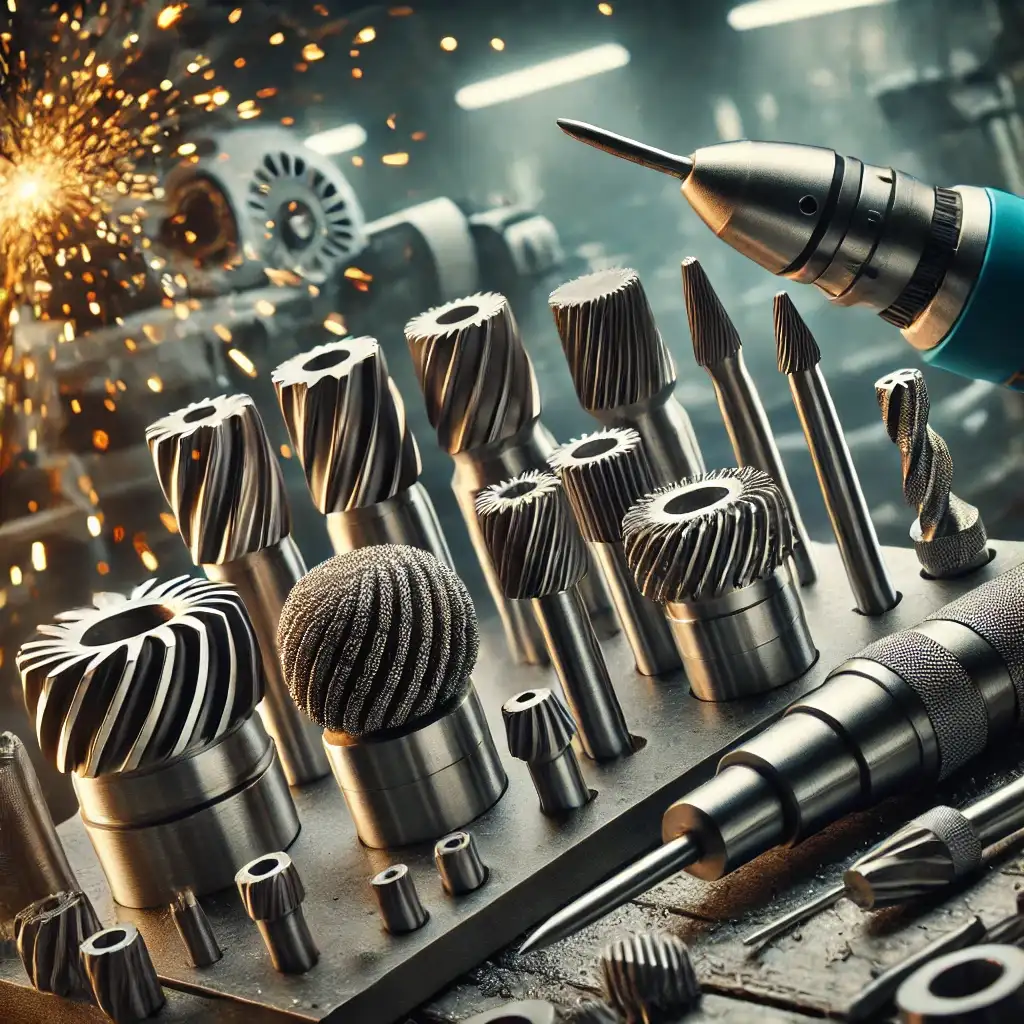

Burrs are a crucial tool in the industries of metalworking and manufacturing; they are used primarily for the refining of surfaces and finishing them after a machining or cutting procedure. They can be found in little sharp edges or rough areas created on a surface and can alter the safety and quality as well as the functionality of an end product. This article focuses on the significance of burrs as well as their function in the world of metalworking.
What Are Burrs?
They are unwanted projections or edges that form after a piece of material has been cut, drilled, milled, or formed during the production process. Burrs can occur on many different types of materials, like plastic, metal, and wood; however, they generally occur on metals. The burrs may be small, sharp edges or more substantial, more sloppy protrusions, based upon the technique used to cut as well as the materials’ properties.
Applications Across Industries
The use of burrs is widespread for:
- Automotive Smoothing components of engines and deburring machines and altering castings.
- Aerospace of ensuring the quality and precision of lightweight metal components.
- Jewelry Making The process of engraving intricate details and creating delicate jewelry.
- tool and die manufacturing The process of customizing and completing areas of molds.
- Woodworking Although they are mostly renowned as metal tools, burrs are efficient for cutting wood.
Uses of Burrs in Metalworking
For metalworking, the burrs are used primarily for:
- Deburring Following drilling, cutting, or machining, parts made of metal typically have rough edges or tiny metal pieces that are referred to as burrs. The need to remove them for safety reasons, to improve functionality, and also improve the look of.
- Surface preparation Burrs aid in smoothing and cleaning surfaces prior to applying coatings, welding, or painting. This improves bonding and finishes.
- detailing and shaping For everything from shaping metal components to fine-tuning complex parts, burrs permit precise shapes that are impossible with other tools.
- Weld cleaning Following welding, burrs may be employed to remove any excess material and then finish the edge.
The Impact of Burrs on Manufacturing
Though they are usually viewed as an unimportant byproduct, they could pose big problems when it comes to production. They may negatively impact the performance of an item since the sharp or uneven edges may result in malfunctions, wear and tear, as well as the destruction of other parts during construction. Additionally, they can create safety issues in the event that workers are handling components with sharp edges.
The presence of burrs can affect the appearance of the product, particularly if finishing the surface is essential. Thus, getting rid of the burrs is vital to guarantee the highest quality of the final product, for both aesthetics and performance.
Burr Removal Methods
There are many methods of getting rid of burrs on metal components. The most popular ways comprise:
- Tool for Deburring Tools for deburring that specialize have been designed to get rid of burrs by hand. The tools are available in many designs, like hand scrapers, rotary files, or burr brushes. They can be used to smooth rough edges.
- Abrasive Methods: Grinding, polishing, and sanding are all effective techniques to remove burrs and create smooth finishes. These methods are commonly employed in more intricate or complicated parts in which precision is essential.
- Vibratory Finishing The method employs vibrating machines to smooth out the burrs by rolling parts inside a container containing the abrasive substances. It’s particularly efficient for smaller components or when working in large amounts.
- Electrochemical Deburring When designing intricate or delicate components Deburring using electrochemical technology is a viable option. The method uses electrical energy to eliminate burrs without touching the materials and is ideal to create intricate designs.
Why Burr Removal is Essential
It’s not just about increasing the appearance of the product. They play a crucial role in the security effectiveness, efficacy, and durability of the components. In the case of the manufacturing of aerospace or automotive components, it is possible for burrs to cause the parts to fail or not fit properly and lead to expensive repairs or devastating problems.
Also, burr removal helps avoid damage to tools and equipment during assembly, cutting down time and costs for maintenance. Also, components that have no burrs can be handled with ease and installed, thereby increasing the efficiency of manufacturing overall.
Safety and Handling Tips
- Always put on protective clothing and eye protection since burrs may release fine dust.
- Choose the appropriate speed setting that is appropriate for the material you are using and the burr kind.
- Allow the tool to be the one to do the job. Using excessive pressure could result in premature wear and breakage.
- Make sure the workpiece is secured prior to starting work in order to prevent mistakes or slips.
Conclusion
Burrs are a common part of the metalworking or manufacturing sectors; however, their elimination is vital to making high-quality, secure, useful items. Through using hand tools or abrasive processes or even electrochemical processes, eliminating burrs is a crucial step in the process of production. If you invest in efficient techniques for removing burrs, companies are able to ensure that their products comply with the most stringent standards for performance and security.
Also Read: Woozoo Fan Review: Quiet, Efficient Cooling for Any Room