Hydrojet Drain Cleaning: The Ultimate Guide to Clearing Stubborn Pipe Clogs & Long-Term Maintenance

Tired of recurring drain backups, stubborn tree root intrusions, and slow-draining pipes? Discover everything about hydrojet drain cleaning—how high-pressure water jetting works, costs, step-by-step processes, and why it outperforms traditional drain snaking.
Table of Contents
- 1. What is Hydrojet Drain Cleaning? (An In-Depth Technical Overview)
- 2. How Hydro Jetting Works: The Physics and Engineering Behind High-Pressure Flushing
- 3. Hydrojetting vs. Traditional Drain Snaking vs. Chemical Cleaners
- 4. Key Signs Your Plumbing System Needs Hydrojetting
- 5. The Complete Step-by-Step Hydrojet Drain Cleaning Process
- 6. What Can Hydro Jetting Remove from Your Pipes?
- 7. Is Hydrojetting Safe for All Pipes? (Risks, Pipe Inspection, & Safety)
- 8. How Much Does Hydrojet Drain Cleaning Cost? (Cost Drivers Breakdown)
- 9. DIY vs. Professional Hydrojetting: Why High-Pressure Jetting Requires Experts
- 10. Preventive Maintenance: How to Keep Sewer Lines Clear After Jetting
- 11. Frequently Asked Questions (FAQs)
1. What is Hydrojet Drain Cleaning? (An In-Depth Technical Overview)
Persistent drain clogs are one of the most frustrating challenges homeowners, commercial property managers, and plumbing technicians encounter. While minor sinks or shower blockages can occasionally be resolved with a plunger, severe blockages deep within main sewer lines demand a more advanced solution. Enter hydrojet drain cleaning (also known as high-pressure water jetting or sewer jetting)—a non-invasive, highly effective plumbing technology designed to restore drainage systems to near-original capacity.
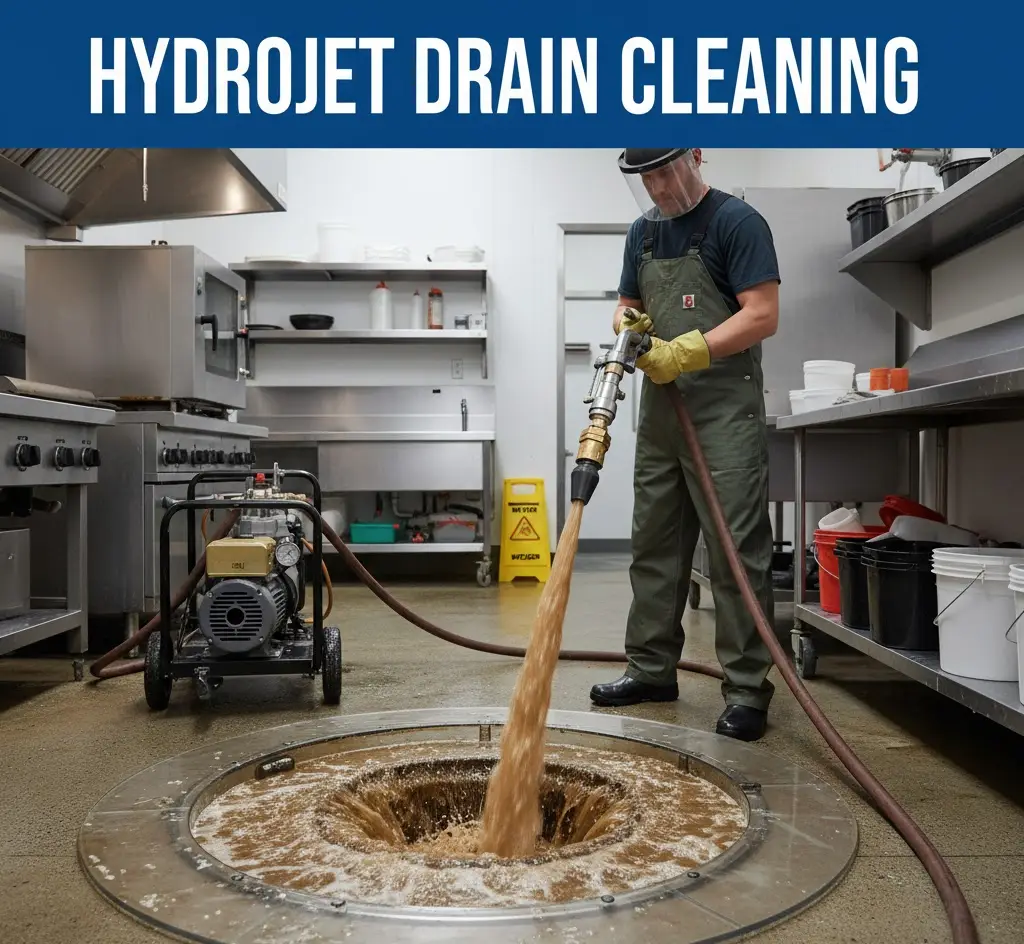
Hydrojetting utilizes specialized high-pressure water pumps, heavy-duty hoses, and engineered directional nozzles to blast streams of water—ranging from 1,500 to 4,000 Pounds per Square Inch (PSI) at flow rates between 2 to 18 gallons per minute (GPM)—through plumbing lines. Unlike traditional drain snakes that merely punch a hole through a blockage, hydrojetting completely scrubs the interior circumference of the pipe wall, scouring away decades of accumulated grease, mineral scale, sludge, hair, and even invasive tree roots.
Because hydrojetting relies entirely on pure pressurized water without synthetic chemicals, it is an environmentally friendly, non-corrosive, and long-lasting sanitation solution for both residential drain lines and heavy commercial grease traps.
2. How Hydro Jetting Works: The Physics and Engineering Behind High-Pressure Flushing
To appreciate the efficiency of hydrojetting, it helps to understand the mechanics of the equipment used by master plumbers:
A. The Pressure Rig and Motorized Pump
At the core of a hydrojetter is a heavy-duty motorized pump (gasoline, diesel, or high-output electric) that pressurizes water drawn from an intake line or onboard water tank. Water pressure is calibrated specifically according to pipe material, diameter, and the severity of the blockage.
B. Specialized Hose and Self-Propelling Nozzles
The pressurized water travels through a flexible, high-tensile hose capable of navigating multiple 90-degree pipe bends. Attached to the head of the hose is a specialized stainless-steel nozzle engineered with multi-directional jet ports:
- Forward-Facing Jets: High-velocity water jets directed straight ahead to break through solid masses, calcified mineral blockages, or dense grease plugs.
- Rear-Facing (Reverse) Jets: Angled backward toward the hose. These backward streams serve two functions: they create forward thrust that pulls the hose deeper into the pipe without manual pushing, and they flush loose debris backward out of the drain opening.
C. 360-Degree Wall Scouring
As the nozzle travels through the sewer line, the rotational water force creates a scrubbing wave. This scouring force peels away sticky grease linings, biological slime, hard water scale, and soap scum, washing everything out to the municipal sewer main or septic tank.
3. Hydrojetting vs. Traditional Drain Snaking vs. Chemical Cleaners
Property owners often ask why they should choose hydrojetting over conventional methods like drain snakes (plumbing augers) or store-bought liquid drain openers. The table below highlights the key differences:
| Feature / Metric | Hydrojet Cleaning | Traditional Drain Snaking | Chemical Drain Cleaners |
|---|---|---|---|
| Primary Action | Completely cleans 100% of pipe walls with pressurized water. | Punches a small hole through the obstruction to restore flow. | Uses exothermic chemical reactions to melt soft organic debris. |
| Removal Capabilities | Grease, heavy sludge, scale, tree roots, sand, flushable wipes. | Soft clogs, hair clumps, small localized obstructions. | Minor grease or hair clogs close to the fixture drain. |
| Pipe Damage Risk | Zero damage on healthy pipes; pre-inspection prevents leaks. | Low; cable tip can occasionally scratch or crack older pipes. | High; chemical corrosion can eat away cast iron and PVC joints. |
| Environmental Impact | 100% Eco-friendly (uses pure clean water). | 100% Eco-friendly (mechanical action). | Toxic; leaches harmful chemicals into soil and waterways. |
| Recurrence Rate | Extremely low; cleans pipe walls so debris cannot re-attach. | Moderate to High; leaves residue behind where clogs re-form. | Very high; temporary relief that leaves buildup intact. |
4. Key Signs Your Plumbing System Needs Hydrojetting
How do you know if your home or commercial building requires high-pressure hydrojetting instead of a simple plunger or auger? Look out for these common warning signs:
- Frequent, Recurring Clogs: If your main drain line backs up every few months despite routine snaking, leftover grease and scale accumulation are likely catching debris again.
- Multiple Slow Drains Simultaneously: When toilets, showers, kitchen sinks, and laundry lines drain slowly at the same time, the main sewer line is obstructed.
- Gurgling Sounds from Plumbing Fixtures: Air trapped behind a major grease or root blockage creates bubbling or gurgling sounds in toilets when sinks drain.
- Foul Sewer Odors Indoors or Outdoors: A persistent smell of sewage around drains or in the yard indicates trapped decaying waste or a sluggish sewer line.
- Sewer Backups in Low-Lying Fixtures: Water backing up into basement floor drains, showers, or tubs whenever a toilet is flushed signals a main line blockage.
- Commercial Kitchen Grease Trap Overflows: Restaurants and commercial kitchens accumulate heavy fats, oils, and grease (FOG) that require hydrojetting to keep lines open.
5. The Complete Step-by-Step Hydrojet Drain Cleaning Process
Professional hydrojetting involves systematic steps to ensure safety, pipe integrity, and complete debris removal. Here is how licensed plumbers execute the job:
Step 1: HD Sewer Camera Video Inspection
Before launching high-pressure water into a system, a plumber feeds a specialized fiber-optic waterproof camera with LED lights down the sewer cleanout. This video inspection identifies the exact location and nature of the clog, determines if tree roots are present, and checks the structural condition of the pipes (detecting cracks, collapse, or severe corrosion).
Expert Rule: Never hydrojet a pipe without a prior camera inspection. Jetting an already cracked or collapsed pipe can expand fractures, wash away surrounding soil, and lead to total pipe failure.
Step 2: Locating and Preparing the Cleanout Point
The technician locates the main sewer cleanout—an accessible threaded pipe fitting located outside the building or in a basement/garage that connects directly to the main line. Accessing via the cleanout prevents dirty water backup inside the house.
Step 3: Equipment Calibration and Nozzle Selection
Based on pipe diameter (3-inch residential lines vs. 6-inch main lines) and pipe material (PVC, cast iron, clay), the plumber selects the appropriate nozzle—such as a penetrating nozzle for solid roots or a spinning nozzle for heavy grease coat—and sets the pressure between 1,500 and 3,500 PSI.
Step 4: Inserting the Hose and Initiating Jetting
The hose is inserted through the cleanout access. Water flow is activated via a foot switch or remote control. Rear-facing water jets propel the hose forward into the pipe. The operator slowly feeds the hose up to the site of the obstruction, letting the high-pressure water cut through the blockage.
Step 5: Backwards Pulling and Scouring Pass
Once the blockage is breached, the technician slowly pulls the hose back toward the entry point. This backward movement forces the water jets to scrape the full interior circumference of the pipe, washing all dislodged sludge out toward the municipal sewer main.
Step 6: Final Post-Jetting Video Camera Inspection
After jetting, a second camera inspection is performed. This confirms that 100% of the blockage, scale, and roots have been removed and verifies that the pipe walls are clean and intact.
6. What Can Hydro Jetting Remove from Your Pipes?
Hydrojetting is one of the most versatile cleaning solutions in modern plumbing. It easily breaks down and clears materials including:
- Fats, Oils, and Grease (FOG): Hardened animal fats and cooking oils that coat pipe walls like solid candle wax.
- Invasive Tree Roots: Fine root tendrils and medium root masses that grow into pipe joints searching for water.
- Scale and Calcification: Hardened mineral crusts formed by calcium and magnesium in hard water areas.
- Biological Slime and Soap Scum: Sticky organic film formed by body oils, soaps, and detergent residue.
- Flushable Wipes and Foreign Objects: Non-biodegradable wipes, paper towels, and hygiene products stuck in sewer lines.
- Sand, Silt, and Mud: Sediment washed into underground yard drains or stormwater pipes.
7. Is Hydrojetting Safe for All Pipes? (Risks, Pipe Inspection, & Safety)
While hydrojetting is safe for well-maintained pipes, high-pressure water can cause damage if applied incorrectly or to structural unsound pipes.
A. Pipe Materials and Hydrojetting Compatibility
- PVC & ABS Plastic Pipes: Safe for standard hydrojetting pressures (up to 3,500–4,000 PSI).
- Cast Iron Pipes: Safe, but requires calibrated pressure to clear scale without disturbing heavily corroded pipe walls.
- Orangeburg (Bituminized Fiber) Pipes: UNSAFE. Old tar-paper pipes manufactured in the mid-20th century will collapse under hydrojet pressures.
- Vitrified Clay Pipes: Safe, but requires caution near loose or brittle clay joints where high pressure could cause damage.
B. Risks of Uninspected Jetting
If an uninspected pipe has significant cracks, offset joints, or bellies (sagging pipe sections), hydrojetting can force water into surrounding soil, washing away ground support and worsening pipe collapse. This makes video camera inspections non-negotiable.
8. How Much Does Hydrojet Drain Cleaning Cost?
Hydrojetting costs vary based on job complexity, pipe access, location, and severity of blockages. Below is a realistic price breakdown for residential and commercial property owners:
| Job Scope / Type | Estimated Cost Range (USD) | Includes |
|---|---|---|
| Standard Residential Drain Line | $350 – $600 | Single line jetting (e.g., kitchen line or laundry drain) via cleanout. |
| Full Main Sewer Line Jetting | $600 – $1,200 | Main sewer line clearing including pre- and post-video camera inspection. |
| Complex Root Removal / Severe Scale | $1,000 – $1,800 | Multiple passes with root-cutting nozzles, specialized descaling heads, and extensive camera work. |
| Commercial Kitchen / Restaurant Grease Traps | $800 – $2,500+ | Heavy-duty commercial jetting to clear thick fats, oils, and grease from industrial drains. |
Key Factors Influencing Overall Cost:
- Cleanout Accessibility: If a plumber has to pull a toilet or install a cleanout access point, labor costs increase.
- Severity of Blockage: Deep root intrusions or rock-hard calcification require more time and specialized nozzle heads.
- Emergency vs. Scheduled Service: Emergency after-hours service calls carry higher labor rates than scheduled maintenance.
9. DIY vs. Professional Hydrojetting: Why High-Pressure Jetting Requires Experts
While DIY rental pressure washer jetter kits are sold online, hydrojetting is not a recommended DIY project for several reasons:
- Extreme Water Pressure Hazards: Pressures above 2,000 PSI can pierce skin, puncture human tissue, and cause severe injury if a nozzle turns around inside a pipe.
- Lack of Diagnostic Video Equipment: Without a commercial sewer camera, DIYers cannot assess pipe condition, leading to accidental pipe blowouts.
- Pipe Structural Damage: Incorrect nozzle choice or excessive pressure can rupture old cast iron or puncture thin plastic lines.
- Hose Recoil and Entrapment: Professional jetter hoses require experienced control to prevent the line from becoming stuck or kinking inside main sewer lines.
To protect your home’s plumbing infrastructure, hydrojetting should always be performed by licensed, insured plumbing professionals trained in high-pressure hydro-dynamics.
10. Preventive Maintenance: How to Keep Sewer Lines Clear After Jetting
Once your sewer lines have been restored to like-new condition via hydrojetting, adopting smart drain habits will prevent future clogs and save money on plumbing repairs:
- Never Pour FOG Down the Sink: Collect cooking fats, grease, and bacon oil in a container and discard in the trash once solidified.
- Use Drain Strainers: Place mesh strainers over sink and shower drains to catch hair, food particles, and soap chunks.
- Flush Only Human Waste and Toilet Paper: Never flush baby wipes, paper towels, facial tissues, feminine hygiene products, or dental floss—even if labeled “flushable.”
- Use Enzymatic Drain Cleaners Monthly: Run eco-friendly bacterial/enzymatic drain cleaners through your lines monthly to safely digest organic film before it thickens.
- Schedule Routine Inspections: For homes with mature trees near main sewer lines, schedule a video inspection every 18 to 24 months to spot root growth early.
11. Frequently Asked Questions (FAQs)
Q1: Will hydrojetting break my old pipes?
No, provided a video camera inspection is performed first. Hydrojetting pressure is calibrated based on pipe age, material, and structural condition. If the pre-inspection reveals cracked, collapsed, or severely weakened pipe walls, a professional plumber will recommend pipe lining or replacement instead of hydrojetting.
Q2: How long does a hydrojetting service take?
A standard residential hydrojetting job—including initial camera inspection, equipment setup, jetting passes, and final inspection—typically takes between 1.5 to 3 hours depending on line accessibility and clog severity.
Q3: How long do the results of hydrojetting last?
Because hydrojetting scours pipe walls completely clean down to the bare pipe surface, results usually last several years. In contrast, drain snaking often leaves residue that allows clogs to re-form within 3 to 6 months.
Q4: Can hydrojetting remove tree roots from sewer lines?
Yes. Hydrojetters equipped with specialized mechanical cutting nozzles or high-PSI rotating nozzles can slice through root masses penetrating pipe joints, flushing them out completely. However, because roots eventually grow back through unsealed pipe cracks, trenchless pipe lining may be needed for a permanent fix.
Q5: Is hydrojetting safe for septic tanks?
Yes. Hydrojetting uses only clean water, making it completely safe for septic systems. It introduces no harsh chemicals that could disrupt the natural bacterial balance necessary for septic tank waste breakdown.